AI Chatbots and Assistants

Explore the best AI Chatbots and Assistants — independent reviews, comparisons, pricing and step-by-step how-to guides, curated by Aizhi.

  • Smart data capture

    Smart data capture

    Smart data capture (SDC), also known as 'intelligent data capture' or 'automated data capture', describes the branch of technology concerned with using computer vision techniques like optical character recognition (OCR), barcode scanning, object recognition and other similar technologies to extract and process information from semi-structured and unstructured data sources. IDC characterize smart data capture as an integrated hardware, software, and connectivity strategy to help organizations enable the capture of data in an efficient, repeatable, scalable, and future-proof way. Data is captured visually from barcodes, text, IDs and other objects - often from many sources simultaneously - before being converted and prepared for digital use, typically by artificial intelligence-powered software. An important feature of SDC is that it focuses not just on capturing data more efficiently but serving up easy-to-access, actionable insights at the instant of data collection to both frontline and desk-based workers, aiding decision-making and making it a two-way process. Smart data capture automates and accelerates capture, applying insights in real time and automating processes based on extracted input. Smart data capture is designed to be repeatable and scalable to reduce low-level manual tasks and eliminate human error. To achieve this goal, smart data capture solutions are often made available using specialist software installed on commodity hardware such as smartphones. However, some solutions may rely on specialized hardware such as dedicated scanning devices, wearables or shop floor robots. == Differences from OCR == Optical character recognition applications are typically concerned with the actual data capture process; they are intended to faithfully reproduce text, words, letters and symbols from a printed document. Smart data capture is multimodal, capable of extracting data from a wider range of semi-structured and unstructured sources, going beyond basic text recognition to offer a wider scope of applications. By extending functionality to provide actionable insights at the point of capture, SDC is also a two-way process (capture-display), while OCR is more commonly one-way (capture only), primarily used for data input. Smart data capture solutions typically have two parts: Data capture (which includes OCR, barcode scanning, object recognition) Functionality that then uses this data to provide actionable insights at the point of capture. == Applications == Smart data capture can be applied to almost any industry and application that requires visual information capture and interpretation. This may include: Retail Warehouse inventory control Logistics, handling and shipping Manufacturing Field service Healthcare Transport and travel Fraud detection

    Read more →
  • Bootstrap (front-end framework)

    Bootstrap (front-end framework)

    Bootstrap (formerly Twitter Bootstrap) is a free and open-source CSS framework directed at responsive, mobile-first front-end web development. It contains HTML, CSS and (optionally) JavaScript-based design templates for typography, forms, buttons, navigation, and other interface components. As of May 2023, Bootstrap is the 17th most starred project (4th most starred library) on GitHub, with over 164,000 stars. According to W3Techs, Bootstrap is used by 19.2% of all websites. == Features == Bootstrap is an HTML, CSS and JS library that focuses on simplifying the development of informative web pages (as opposed to web applications). The primary purpose of adding it to a web project is to apply Bootstrap's choices of color, size, font and layout to that project. As such, the primary factor is whether the developers in charge find those choices to their liking. Once added to a project, Bootstrap provides basic style definitions for all HTML elements. The result is a uniform appearance for prose, tables and form elements across web browsers. In addition, developers can take advantage of CSS classes defined in Bootstrap to further customize the appearance of their contents. For example, Bootstrap has provisioned for light- and dark-colored tables, page headings, more prominent pull quotes, and text with a highlight. Bootstrap also comes with several JavaScript components which do not require other libraries like jQuery. They provide additional user interface elements such as dialog boxes, tooltips, progress bars, navigation drop-downs, and carousels. Each Bootstrap component consists of an HTML structure, CSS declarations, and in some cases accompanying JavaScript code. They also extend the functionality of some existing interface elements, including for example an auto-complete function for input fields. The most prominent components of Bootstrap are its layout components, as they affect an entire web page. The basic layout component is called "Container", as every other element in the page is placed in it. Developers can choose between a fixed-width container and a fluid-width container. While the latter always fills the width with the web page, the former uses one of the five predefined fixed widths, depending on the size of the screen showing the page: Smaller than 576 pixels 576–768 pixels 768–992 pixels 992–1200 pixels 1200–1400 pixels Larger than 1400 pixels Once a container is in place, other Bootstrap layout components implement a CSS Flexbox layout through defining rows and columns. A precompiled version of Bootstrap is available in the form of one CSS file and three JavaScript files that can be readily added to any project. The raw form of Bootstrap, however, enables developers to implement further customization and size optimizations. This raw form is modular, meaning that the developer can remove unneeded components, apply a theme and modify the uncompiled Sass files. == History == === Early beginnings === Bootstrap, originally named Twitter Blueprint, was developed by Mark Otto and Jacob Thornton at Twitter in 2010 as a framework to encourage consistency across internal tools. Before Bootstrap, various libraries were used for interface development, which led to inconsistencies and a high maintenance burden. According to Otto: A super small group of developers and I got together to design and build a new internal tool and saw an opportunity to do something more. Through that process, we saw ourselves build something much more substantial than another internal tool. Months later, we ended up with an early version of Bootstrap as a way to document and share common design patterns and assets within the company. After a few months of development by a small group, many developers at Twitter began to contribute to the project as a part of Hack Week, a hackathon-style week for the Twitter development team. It was renamed from Twitter Blueprint to Twitter Bootstrap and released as an open-source project on August 19, 2011. It has continued to be maintained by Otto, Thornton, a small group of core developers, and a large community of contributors. === Bootstrap 2 === On January 31, 2012, Bootstrap 2 was released, which added built-in support for Glyphicons, several new components, as well as changes to many of the existing components. This version supports responsive web design, meaning the layout of web pages adjusts dynamically, taking into account the characteristics of the device used (whether desktop, tablet, mobile phone). Shortly before the release of Bootstrap 2.1.2, Otto and Thornton left Twitter, but committed to continue to work on Bootstrap as an independent project. === Bootstrap 3 === On August 19, 2013, Bootstrap 3 was released. It redesigned components to use flat design and a mobile first approach. Bootstrap 3 features new plugin system with namespaced events. Bootstrap 3 dropped Internet Explorer 7 and Firefox 3.6 support, but there is an optional polyfill for these browsers. Bootstrap 3 was also the first version released under the twbs organization on GitHub instead of the Twitter one. === Bootstrap 4 === Otto announced Bootstrap 4 on October 29, 2014. The first alpha version of Bootstrap 4 was released on August 19, 2015. The first beta version was released on August 10, 2017. Otto suspended work on Bootstrap 3 on September 6, 2016, to free up time to work on Bootstrap 4. Bootstrap 4 was finalized on January 18, 2018. Significant changes include: Major rewrite of the code Replacing Less with Sass Addition of Reboot, a collection of element-specific CSS changes in a single file, based on Normalize Dropping support for IE8, IE9, and iOS 6 CSS Flexible Box support Adding navigation customization options Adding responsive spacing and sizing utilities Switching from the pixels unit in CSS to root ems Increasing global font size from 14px to 16px for enhanced readability Dropping the panel, thumbnail, pager, and well components Dropping the Glyphicons icon font Huge number of utility classes Improved form styling, buttons, drop-down menus, media objects and image classes Bootstrap 4 supports the latest versions of Google Chrome, Firefox, Internet Explorer, Opera, and Safari (except on Windows). It additionally supports back to IE10 and the latest Firefox Extended Support Release (ESR). === Bootstrap 5 === Bootstrap 5 was officially released on May 5, 2021. Major changes include: New offcanvas menu component Removing dependence on jQuery in favor of vanilla JavaScript Rewriting the grid to support responsive gutters and columns placed outside of rows Migrating the documentation from Jekyll to Hugo Dropping support for Internet Explorer Moving testing infrastructure from QUnit to Jasmine Adding custom set of SVG icons Adding CSS custom properties Improved API Enhanced grid system Improved customizing docs Updated forms RTL support Built in darkmode support

    Read more →
  • Browser sniffing

    Browser sniffing

    Browser sniffing (also known as User agent sniffing and browser detection) is a set of techniques used in websites and web applications in order to determine the web browser a visitor is using, and to serve browser-appropriate content to the visitor. It is also used to detect mobile browsers and send them mobile-optimized websites. This practice is sometimes used to circumvent incompatibilities between browsers due to misinterpretation of HTML, Cascading Style Sheets (CSS), or the Document Object Model (DOM). While the World Wide Web Consortium maintains up-to-date central versions of some of the most important Web standards in the form of recommendations, in practice no software developer has designed a browser which adheres exactly to these standards; implementation of other standards and protocols, such as SVG and XMLHttpRequest, varies as well. As a result, different browsers display the same page differently, and so browser sniffing was developed to detect the web browser in order to help ensure consistent display of content. == Sniffer methods == === Client-side sniffing === Web pages can use programming languages such as JavaScript which are interpreted by the user agent, with results sent to the web server. For example: This code is run by the client computer, and the results are used by other code to make necessary adjustments on client-side. In this example, the client computer is asked to determine whether the browser can use a feature called ActiveX. Since this feature was proprietary to Microsoft, a positive result will indicate that the client may be running Microsoft's Internet Explorer. This is no longer a reliable indicator since Microsoft's open-source release of the ActiveX code, however, meaning that it can be used by any browser. === Standard Browser detection method === The web server communicates with the client using a communication protocol known as HTTP, or Hypertext Transfer Protocol, which specifies that the client send the server information about the browser being used to view the website in a User-Agent header. === Server-side sniffing === Extensive browser techniques enable persistent user tracking even if users try to stay anonymous. See device fingerprint for more details on browser fingerprinting. == Issues and standards == Many websites use browser sniffing to determine whether a visitor's browser is unable to use certain features (such as JavaScript, DHTML, ActiveX, or cascading style sheets), and display an error page if a certain browser is not used. However, it is virtually impossible to account for the tremendous variety of browsers available to users. Generally, a web designer using browser sniffing to determine what kind of page to present will test for the three or four most popular browsers, and provide content tailored to each of these. If a user is employing a user agent not tested for, there is no guarantee that a usable page will be served; thus, the user may be forced either to change browsers or to avoid the page. The World Wide Web Consortium, which sets standards for the construction of web pages, recommends that web sites be designed in accordance with its standards, and be arranged to "fail gracefully" when presented to a browser which cannot deal with a particular standard. Browser sniffing increases maintenance needed. Websites treating some browsers differently should provide an alternative version for other browsers. Use of user agent strings are error-prone because the developer must check for the appropriate part, such as "Gecko" instead of "Firefox". They must also ensure that future versions are supported. Furthermore, some browsers allow changing the user agent string, making the technique useless.

    Read more →
  • Ethiopian feminists facing digital gender-based violence

    Ethiopian feminists facing digital gender-based violence

    Against a background of traditional views of women, rising internet use, a young population and an unsafe offline life, women and girls in Ethiopia are facing increasing amounts of digital violence. Some women, feeling endangered, have left the country as a result. Researchers, activists and lawyers have called for online content to be taken down and specific digital legislation to be drafted and enforced. == Online violence and its offline effects == Sexual violence against women and girls in Ethiopia is common. In 2023, in the Women, Peace and Security Index by Georgetown University, Ethiopia came 146 out of 177 countries. Over several years online harassment of and violence against women and girls in Ethiopia has increased. It can range from sexist remarks about appearance and women’s role in society, to revenge porn, threats of beating, acid attacks, abduction, rape or death. The real-life effect on women and girls of these attacks can include mental health problems, damaged reputations and a withdrawal from public and economic life. When the online attacks migrate to the real world, for example when online attackers find out where the targeted women and girls live, this can result in physical attacks, street harassment, threats to children and can cause victims to move house or job or even flee the country in fear of femicide. In a country that criminalises homosexuality, it can also lead to physical attacks on LGBTQI+ people in particular and indeed on anybody labelled as homosexual. == Research studies == The Centre for Information Resilience (CIR) conducted interviews with Ethiopian women holding public roles or being active online. The centre published a report on this in 2024 entitled ‘Silenced, Shamed and Threatened’. They found that technology-facilitated gender-based violence (TFGBV) had become “normalised to the point of invisibility.” In 2024, CER also published an analysis of gendered hate speech on social media in Ethiopia called ‘Normalised and invisible.’ It is thought that traditional views of women, the young population, the rise in internet use and the war in Tigray, when sexual violence was used as a weapon of war by Ethiopian and Eritrean soldiers, have all helped to create an online environment in which even femicide is considered unremarkable. AFP Fact Check collaborated with Deutsche Welle Akademie, to investigate the cyber harassment of women in Ethiopia, analysing misogynistic posts published on TikTok and Facebook. They discovered disparaging remarks about women’s physical appearance, threats of acid attacks and other physical violence, and the public sharing of women’s phone numbers. == Individuals affected == Women in particular jeopardy of digital gender-based violence are feminists, activists, politicians and those with a public profile. Some women are known to have fled Ethiopia fearing for their lives after online and offline threats. Yordanos Bezabih, an Ethiopian women’s rights activist, started a campaign with the hashtag #JusticeforHeaven to fight against gender-based cyberspace violence. As a result, she herself become a target. She experienced years of online threats of acid attacks, gang-rape and death. In 2025, subscribers to an online community organised a search for her address. Deepfake nude images of her were shared, she was filmed in real life, her house and online accounts were broken into, her private photos and messages posted on social media. When the attackers finally circulated her address, suggesting that she be executed, she left Ethiopia on a human rights defender scholarship. In 2023, Lella Misikir helped to start a campaign, called ‘My Whistle, My Voice’, that suggested women carry whistles and use them if they were harassed in the street. A TikTok video of the campaign became popular. Shortly after, videos of Misikir were circulated suggesting that she was gay. Her online attackers next searched for her address. In November 2024, Misikir left the country. == Legal issues == Ethiopia has some laws on online harassment and defamation, for example the Computer Crimes Proclamation. However, technology-facilitated, gender-based violence (TFGBV), such as deepfakes, non-consensual image sharing, and coordinated harassment, is not explicitly recognized as crime. In practice too, women are often not believed when reporting such violence and are not taken seriously. Police advice is often that women affected should simply leave the online space. Social media platforms can remove content when it is brought to their attention but the offenders are not banned. Users can only block them.

    Read more →
  • Lawbot

    Lawbot

    Lawbots are a broad class of customer-facing legal AI applications that are used to automate specific legal tasks, such as document automation and legal research. The terms robot lawyer and lawyer bot are used as synonyms to lawbot. A robot lawyer or a robo-lawyer refers to a legal AI application that can perform tasks that are typically done by paralegals or young associates at law firms. However, there is some debate on the correctness of the term. Some commentators say that legal AI is technically speaking neither a lawyer nor a robot and should not be referred to as such. Other commentators believe that the term can be misleading and note that the robot lawyer of the future will not be one all-encompassing application but a collection of specialized bots for various tasks. Lawbots use various artificial intelligence techniques or other intelligent systems to limit humans' direct ongoing involvement in certain steps of a legal matter. The user interfaces on lawbots vary from smart searches and step-by-step forms to chatbots. Consumer and enterprise-facing lawbot solutions often do not require direct supervision from a legal professional. Depending on the task, some client-facing solutions used at law firms operate under an attorney supervision. == Levels of autonomy == The following levels of autonomy (LoA) are suggested for automated AI legal reasoning: Level 0 (LoA0): No automation for AI legal reasoning Level 1 (LoA1): Simple assistance automation Level 2 (LoA2): Advanced assistance automation Level 3 (LoA3): Semi-autonomous automation Level 4 (LoA4): Domain automation Level 5 (LoA5): Fully-autonomous automation Level 6 (LoA6): Superhuman automation == Examples == Some legal AI solutions are developed and marketed directly to the customers or consumers, whereas other applications are tools for the attorneys at law firms. There are already hundreds of legal AI solutions that operate in multitude of ways varying in sophistication and dependence on scripted algorithms. One notable legal technology chatbot application is DoNotPay. It had started off as an app for contesting parking tickets, but has since expanded to include features that help users with many different types of legal issues, ranging from consumer protection to immigration rights and other social issues. == Impact on the legal industry == In the 2016 report, Deloitte estimated that more than 110,000 law jobs in just the United Kingdom alone could disappear within the next twenty years due to automation. This change could result in the creation of more highly skilled jobs and in the reduction of paralegal and temporary positions. Deloitte's report asserts that "there is significant potential for high-skilled roles that involve repetitive processes to be automated by smart and self-learning algorithms". According to Lawyers to Engage, between 22% of a lawyer’s work and 35% of a legal assistant’s work can be automated in the US. Top law schools like Harvard have already begun to integrate Artificial Intelligence into the curriculum. Legal tech start-up companies have begun developing applications that assist law firms with completing low-risk legal processes. These applications can enable lawyers to focus on more work that requires their specific expertise. The automation of processes like contract reviewing, enforcement of negotiations (smart contracts) and client intake (expert systems) allows law firms to streamline their procedures and improve efficiency. In addition, automation benefits small-to-medium law firms that do not have the resources to utilize junior talent on such routine tasks. The increase of law firms utilizing automated applications could result into legal tech becoming a necessity in the industry. Digital Reason CEO, Tim Estes, stated that those who refuse the opportunity to integrate AI in their workflow are “most at risk.” In 2018, Forbes reported a 713% increase in investments in legal tech. This rapid growth is reflective of law firms beginning to “cede business to… new model legal providers… that meld technological, business and legal expertise.” == Access to law and justice == It has been widely estimated for at least the last generation that all the programs and resources devoted to ensuring access to justice address only 20% of the civil legal needs of low-income people in the United States. Drawing on this experience, in late 2011, the U.S. government-funded Legal Services Corporation decided to convene a summit of leaders to explore how best to use technology in the access-to-justice community. The group adopted a mission for The Summit on the Use of Technology to Expand Access to Justice (Summit) consistent with the magnitude of the challenge: "to explore the potential of technology to move the United States toward providing some form of effective assistance to 100% of persons otherwise unable to afford an attorney for dealing with essential civil legal needs". In April 2017, joined by Microsoft and Pro Bono Net, the Legal Services Corporation (LSC) announced a pilot program to develop online, statewide legal portals to direct individuals with civil legal needs to the most appropriate forms of assistance. == Technological limitations == Current research in subjects such as computational privacy, explainable machine learning, Bayesian deep learning, knowledge-intensive machine learning, and transfer learning reveals that we do not yet have the technology to enable Level 4 to 6 AI lawbots. In 2023, OpenLaw began developing a model called Law Bot, which interacts in a conversational way as an attorney. The dialogue format makes it possible for Law Bot to answer follow-up questions, challenge incorrect premises, and reject inappropriate requests. Currently, they try to ensure it is in full compliance with all laws and regulations while conducting further beta testing before releasing it to the general public.

    Read more →
  • Institute of Telecommunications Professionals

    Institute of Telecommunications Professionals

    The Institute of Telecommunications Professionals (ITP) is a membership organisation for professionals in the telecommunications industry, based in the United Kingdom. The Institute was originally founded in 1906. It is now a registered company with Companies House in the United Kingdom, incorporated in 2002. Brendan O' Mahony has been the chief executive of the ITP. Lucy Woods presided over ITP for fifteen years, until 2018, when the organization named Kevin Paige chairman for five years. In 2022 the ITP appointed its new CEO, Charlotte Goodwill. In 2021, the ITP assisted a UK fibre network Vorboss in establishing its training academy. In 2023, the ITP appointed Tim Creswick, the CEO of Vorboss, as the new chair of its board of directors. The institute has an associated journal, the Journal of the Institute of Telecommunications Professionals, established in 2007 and published quarterly.

    Read more →
  • Mass media use by the Islamic State

    Mass media use by the Islamic State

    The Islamic State (IS) is known for its extensive and effective use of propaganda. It uses a version of the Muslim Black Standard flag and developed an emblem which has clear symbolic meaning in the Muslim world. The Islamic State targets younger audiences, such as teenagers and young adults, since they are more vulnerable to propaganda. It is known to exploit the internet to spread its propaganda by establishing websites, such as the Al Fustat domain. Videos by the Islamic State are commonly accompanied by nasheeds (chants), notable examples being the chant Dawlat al-Islam Qamat, which came to be viewed as an unofficial anthem of the Islamic State, and Salil al-Sawarim. Academic research has emphasized the scale and volume of Islamic State media production beyond its flagship magazines. A quantitative study cited in R. Malash’s academic work documented 1,373 distinct Islamic State media products released over a six-month period between 1 August 2017 and 28 February 2018, including magazines, newsletters, reports, photographic releases, audio recordings, and other media formats. Scholars have used such datasets to illustrate the breadth and intensity of the group’s media output, particularly during periods of territorial decline, when propaganda activity remained high despite military pressure. == Traditional media == === Al-Furqan Foundation for Media Production === In January 2006, shortly after the group's rebranding as the "Islamic State of Iraq", it established the Al-Furqan Foundation for Media Production (Arabic: مؤسسة الفرقان للإنتاج الإعلامي, romanized: Muasasat al-Furqān lil'īntāj al'ilāmī), which produces CDs, DVDs, posters, pamphlets, and web-related propaganda products and official statements. It is the primary media production house of the Islamic State and responsible for production of major media releases, including the statements of the spokesmen and leaders of the group. On January 10, 2006, Al-Furqan released its very first video, titled (Arabic: زحف الأنوار, romanized: Zahf al-Anwār) It was founded by the Iraqi man Dr Wa'il al-Fayad, known as Abu Muhammad al-Furqan. He got his name "Al-Furqan" from his role in founding this media house, which was named after the 25th surah of the Quran Al-Furqan. It is the oldest media production house for the Islamic State, being founded in November 2006 to release media for the Islamic State of Iraq. The earliest release indexed by the SITE Intelligence Group is on 21 November 2006, documenting the storming of a police station in the Iraqi town of Miqdadiyah. Al-Furqan is considered to be a considerable innovation in jihadist media, with Kavkaz Center describing it as "a milestone on the path of jihad, a distinguished media that takes the great care in the management of the conflict with the crusaders and their tails and to expose the lies in the crusader's media." In October 2007, the Long War Journal reported on United States Army raids targeting Al-Furqan media cell members across Iraq, including in Mosul and Samarra. Between August 2013 and March 2014 they released the 22 part series Messages from the Land of Epic Battles. On 2 September 2014 SITE Intelligence Group discovered the beheading video called A Second Message to America, about the death of Steven Sotloff. Since then, Al-Furqan has released videos of their operations across Iraq and Syria, as well as execution videos directed to governments around the world. In April 2019, Al-Furqan released a video Interviewing Abu Bakr al-Baghdadi. Al-Furqan also produces media in the form of audio, which consists mostly of recordings of IS leaders and spokesmen giving speeches, as well as producing a single nasheed under their name called "Ya Allah Al-Jannah" (O Allah, (we ask you for) Paradise), sung by now-dead member of IS, Uqab Al-Marzuqi. === Al-I'tisam Foundation for Media Production === The Islamic State of Iraq founded a second media foundation - Al-I'tisam Media Foundation - around 2011, marked by their first video release, titled "The Conqueror of the Murtaddin: Abu Ahmad Al-Ansari". The foundation has since released a few series of videos, 50 parts of "Windows on the Land of Battles", 9 parts of "Pictures from the Land of Battles", a 9-part series quoting leaders about the establishment of the Islamic State, and other series before their last release, "Deterring the Safavids in Salah ad-Din" in 2015. Since then, there were no further releases from their behalf. === Al-Hayat Media Center === In mid-2014, IS established the Al-Hayat Media Center, which targets Western audiences and produces material in English, German, Russian, Urdu, Indonesian, Turkish, Bengali, Chinese, Bosnian, Kurdish, Uyghur, and French. When IS announced its expansion to other countries in November 2014 it established media departments for the new branches, and its media apparatus ensured that the new branches follow the same models it uses in Iraq and Syria. Then FBI Director James Comey said that IS's "propaganda is unusually slick," noting that, "They are broadcasting... in something like 23 languages". In July 2014, Al-Hayat began publishing a digital magazine called Dabiq, in a number of different languages including English. According to the magazine, its name is taken from the town of Dabiq in northern Syria, which is mentioned in a hadith about Armageddon. Al-Hayat also began publishing other digital magazines, including the Turkish language Konstantiniyye, the Ottoman word for Istanbul, the French language Dar al-Islam, and the Russian language Istok (Russian: Исток). By late 2016, these magazines had apparently all been discontinued, with Al-Hayat's material being consolidated into a new magazine called Rumiyah (Arabic for Rome). === Al-Naba === While the group's glossy, foreign-language magazines like Dabiq and Rumiyah ceased publication as the group lost territory, the weekly Arabic newsletter Al-Naba (The News) has continued to publish regularly, becoming the central pillar of the group's "media jihad" in the post-territorial phase. Recent scholarship, including studies published in 2025, suggests that Al-Naba serves a dual purpose: maintaining internal cohesion among dispersed fighters and projecting a narrative of endurance to enemies. Unlike the earlier magazines which were designed for recruitment, Al-Naba focuses on bureaucratic reporting, military statistics, and religious instruction. These are then translated and disseminated by decentralized supporter networks ("media mujahideen") to reach non-Arabic speakers. === Furat Media Center === The Al-Furat Media Center is another media center established in around 2015 to cater towards non-Arab speaking audiences. However, unlike the other organizations, the production wasn't as professional as ones made by the other media centers. Instead, they partially relied on local media departments and foreign communities of the Mujahideen to produce short-form videos. However, some professional long-form videos were also made under their behalf. As of now, the media center is the only known active branch of all the media centers of the Islamic State, after heavy losses from past campaigns against them. Their last release was "The Resolve of Muwahhidin in Russia", where videos from the Surovikino penal colony hostage crisis were edited and released. === Ajnad Foundation for Media Production === Ajnad Foundation is one of the official media wings of Islamic State which produces nasheeds and Quran recitations. It was established in January 2014 and has released more than 150 nasheeds. === Asdaa Foundation === Like the Ajnad Foundation, the Asdaa Foundation (Arabic: مؤسسة أصداء) or Asedaa Foundation produces Anasheed (Islamic chants). The foundation is the closest counterpart to Ajnad in producing Islamic State nasheeds, only difference being Ajnad is directly linked to the Islamic State while Asdaa is only classified as a "supporter organization" (munaser/munasera). The foundation had humble beginnings possibly in Yemen, where low-quality nasheeds were produced at first by 2 munshids, Abu Layth Al-Iraqi and Abu Ya'qub Al-Yamani. After that, the quality had improved a bit (possibly with new equipment and increased recognition) and eventually had its nasheeds included in the Islamic State's official media releases. One of its munshids, Abu Hafs is a renowned munshid who sings around 70 nasheeds, who as well works with Ajnad Foundation in some instances. He is currently alive, and working under Ansar Production Center (مركز إنتاج الأنصار), another Munasir foundation and Asedaa. Another Yemeni munshid, Abu Musab al-Adani, worked temporarily with Asdaa Foundation before defecting back to AQAP, from which he previously defected from. Some of their anasheed is used in IS's execution videos, a popular one is their human slaughterhouse execution video released during the time of Eid Al-Adha in 2016. The background nasheed they used was "We Came To Fill The Horizons With Terror", produced by the Asd

    Read more →
  • Problematic social media use

    Problematic social media use

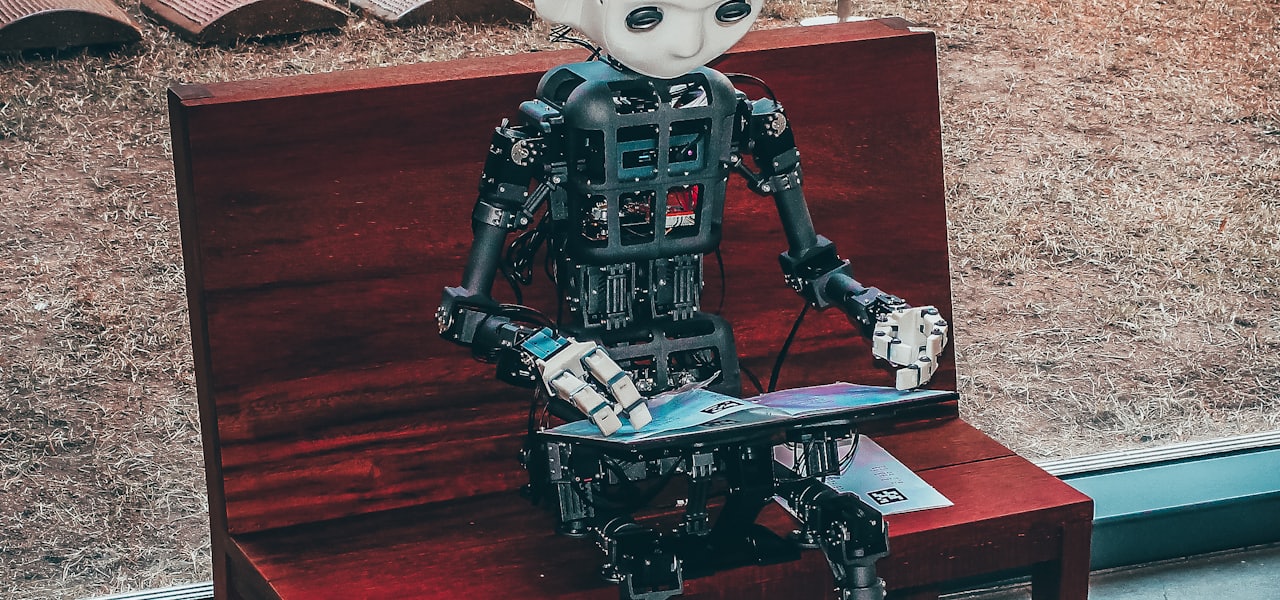
    Excessive use of social media can lead to problems including impaired functioning and a reduction in overall wellbeing, for both users and those around them. Such usage is associated with a risk of mental health problems, sleep problems, academic struggles, and daytime fatigue. Psychological or behavioural dependence on social media platforms can result in significant negative functions in peoples daily lives. The risk of problems is also related to the type of platform of social media or online community being used. People of different ages and genders may be affected in different ways by problematic social media use. == Signs and symptoms == Signs of social media addiction or excessive use of social media include many behaviours similar to substance use disorders, including mood modification, salience, tolerance, stress withdrawal symptoms, psychological distress, anxiety and depression, conflict, and relapse, and low self esteem. People with problematic social media habits are at risk of being addicted and may require more time on social media as time passes. Frequent social media use may also be associated with self-reported symptoms of attention deficit hyperactivity disorder. Social anxiety (or fear of missing out) is another potential symptom. Social anxiety is defined as having intense anxiety or fear of being judged, negatively evaluated, or rejected in a social or performance situation. The fear of missing out can contribute to excessive usage due to frequent checking the media constantly throughout the day to check in and see what others are doing instead of doing other activities. Common signs include displacement, or replacing meaningful other activities with social media, and loneliness. == Causes and mechanisms == There are many theories for the mechanism or cause behind a person having problematic social media use. The transition from normal to problematic social media use occurs when a person relies on it to relieve stress, loneliness, depression, or provide continuous rewards. Cognitive-behavioral model – People increase their use of social media when they are in unfamiliar environments or awkward situations; Social skill model – People pull out their phones and use social media when they prefer virtual communication as opposed to face-to-face interactions because they lack self-presentation skills; Socio-cognitive model – This person uses social media because they love the feeling of people liking and commenting on their photos and tagging them in pictures. They are attracted to the positive outcomes they receive on social media. There are parallels to the gambling industry inherent to the design of various social media sites, with "'ludic loops' or repeated cycles of uncertainty, anticipation and feedback" potentially contributing to problematic social media use. Another factor directly facilitating the development of addiction to social media is the implicit attitude toward the IT artifact. Social media use may also stimulate the reward pathway in the brain. There is also a theory that social media addiction fulfills a basic evolutionary drives in the wake of mass urbanization worldwide. The basic psychological needs of "secure, predictable community life that evolved over millions of years" remain unchanged, leading some to find online communities to cope with the new individualized way of life in some modern societies. The "Evolutionary Mismatch" hypothesis holds that modern digital platforms amplify social competition and comparison in ways our ancestors never faced, possibly triggering maladaptive patterns such as anxiety, depression, or compulsive use. Similarly, some scholars compare social media to "junk food": The approach taken to develop social media platforms may contribute to problematic social media use. The ability to scroll and stream content endlessly and how app developers distort time by affecting the 'flow' of content when scrolling, potentially resulting in the Zeigarnik effect (the human brain will continue to pursue an unfinished task until a satisfying closure. Autoplay modes, the personalized nature of the content results in emotional attachment (the user values this above its actual value, which is referred to as the endowment effect), and the exposure effect (repeated exposure to a distinct stimulus by the user can condition the user into an enhanced or improved attitude toward it). The interactive nature of the platforms, including the ability to "like" content has also been linked. Even though social media can satisfy personal communication needs, those who use it at higher rates are shown to have higher levels of psychological distress. == Diagnosis == While there is no official diagnostic term or measurement, problematic social media use is conceptualized as a non-substance-related disorder, resulting in preoccupation and compulsion to engage excessively in social media platforms despite negative consequences. No diagnosis exists for problematic social media use in either the ICD-11 or DSM-5. Excessive use of an activity, like social media, does not directly equate with addiction. There are other factors that could lead to someone's social media addiction including personality traits and pre-existing tendencies. While the extent of social media use and addiction are positively correlated, it is erroneous to employ use (the degree to which one makes use of the site's features, the effort exerted during use sessions, access frequency, etc.) as a proxy for addiction. Indicators of a potential dependence on social media include: Mood swings: a person uses social media to regulate his or her mood, or as a means of escaping real world conflicts. Relevance: social media starts to dominate a person's thoughts at the expense of other activities. Salience: social media becomes the most important part of someone's life. Tolerance: a person increases their time spent on social media to experience previously associated feelings they had while using social media. Withdrawal: when a person can not access social media their sleeping or eating habits change or signs of depression or anxiety can become present. Conflicts in real life: when social media is used excessively, it can affect real-life relationships with family and friends. Relapse: the tendency for previously affected individuals to revert to previous patterns of excessive social media use. There have been several scales developed and validated that help to understand the issues regarding problematic social media use. There is not one single scale that is being used by all researchers. == Treatment == Screen time recommendations for children and families have been developed by the American Academy of Pediatrics. Possible therapeutic interventions published include: Self-help interventions, including application-specific timers; Cognitive behavioural therapy; and Organisational and schooling support. Medications have not been shown to be effective in randomized, controlled trials for the related conditions of Internet addiction disorder or gaming disorder. == Prevention == Prevention approaches include screen time monitoring apps and other tech-based approaches to improve efficiency and decrease screen time and tools to help with addiction to online platform products. Parents' methods for monitoring, regulating, and understanding their children's social media use are referred to as parental mediation. Parental mediation strategies include active, restrictive, and co-using methods. Active mediation involves direct parent-child conversations that are intended to educate children on social media norms and safety, as well as the variety and purposes of online content. Restrictive mediation entails the implementation of rules, expectations, and limitations regarding children's social media use and interactions. Co-use is when parents jointly use social media alongside their children, and is most effective when parents are actively participating (like asking questions, making inquisitive/supportive comments) versus being passive about it. Active mediation is the most common strategy used by parents, though the key to success for any mediation strategy is consistency/reliability. When parents reinforce rules inconsistently, have no mediation strategy, or use highly restrictive strategies for monitoring their children's social media use, there is an observable increase in children's aggressive behaviours. When parents openly express that they are supportive of their child's autonomy and provide clear, consistent rules for media use, problematic usage and aggression decreases. Knowing that consistent, autonomy-supportive mediation has more positive outcomes than inconsistent, controlling mediation, parents can consciously foster more direct, involved, and genuine dialogue with their children. This can help prevent or reduce problematic social media use in children and teenagers. == Outcomes == === Adolescents and teens === Increased social medi

    Read more →
  • Computational photography

    Computational photography

    Computational photography refers to digital image capture and processing techniques that use digital computation instead of optical processes. Computational photography can improve the capabilities of a camera, or introduce features that were not possible at all with film-based photography, or reduce the cost or size of camera elements. Examples of computational photography include in-camera computation of digital panoramas, high-dynamic-range images, and light field cameras. Light field cameras use novel optical elements to capture three-dimensional scene information, which can then be used to produce 3D images, enhanced depth-of-field, and selective de-focusing (or "post focus"). Enhanced depth-of-field reduces the need for mechanical focusing systems. All of these features use computational imaging techniques. The definition of computational photography has evolved to cover a number of subject areas in computer graphics, computer vision, and applied optics. These areas are given below, organized according to a taxonomy proposed by Shree K. Nayar. Within each area is a list of techniques, and for each technique, one or two representative papers or books are cited. Deliberately omitted from the taxonomy are image processing (see also digital image processing) techniques applied to traditionally captured images to produce better images. Examples of such techniques are image scaling, dynamic range compression (i.e. tone mapping), color management, image completion (a.k.a. inpainting or hole filling), image compression, digital watermarking, and artistic image effects. Also omitted are techniques that produce range data, volume data, 3D models, 4D light fields, 4D, 6D, or 8D BRDFs, or other high-dimensional image-based representations. Epsilon photography is a sub-field of computational photography. == Effect on photography == Photos taken using computational photography can allow amateurs to produce photographs rivalling the quality of professional photographers, but as of 2019 do not outperform the use of professional-level equipment. == Computational illumination == This is controlling photographic illumination in a structured fashion, then processing the captured images, to create new images. The applications include image-based relighting, image enhancement, image deblurring, geometry/material recovery and so forth. High-dynamic-range imaging uses differently exposed pictures of the same scene to extend dynamic range. Other examples include processing and merging differently illuminated images of the same subject matter ("lightspace"). == Computational optics == This is a capture of optically coded images, followed by computational decoding to produce new images. Coded aperture imaging was mainly applied in astronomy and X-ray imaging to boost the image quality. Instead of a single pin-hole, a pinhole pattern is applied in imaging, and deconvolution is performed to recover the image. In coded exposure imaging, the on/off state of the shutter is coded to modify the kernel of motion blur. In this way, motion deblurring becomes a well-conditioned problem. Similarly, in a lens based coded aperture, the aperture can be modified by inserting a broadband mask. Thus, out of focus deblurring becomes a well-conditioned problem. The coded aperture can also improve the quality in light field acquisition using Hadamard transform optics. Coded aperture patterns can also be designed using color filters, in order to apply different codes at different wavelengths. This allows for increase the amount of light that reaches the camera sensor, compared to binary masks. == Computational imaging == Computational imaging is a set of imaging techniques that combine data acquisition and data processing to create the image of an object through indirect means to yield enhanced resolution, additional information such as optical phase or 3D reconstruction. The information is often recorded without using a conventional optical microscope configuration or with limited datasets. Computational imaging allows going beyond physical limitations of optical systems, such as numerical aperture, or even obliterates the need for optical elements. For parts of the optical spectrum where imaging elements such as objectives are difficult to manufacture or image sensors cannot be miniaturized, computational imaging provides useful alternatives, in fields such as X-ray and THz radiations. === Common techniques === Among common computational imaging techniques are lensless imaging, computational speckle imaging , ptychography and Fourier ptychography. Computational imaging technique often draws on compressive sensing or phase retrieval techniques, where the angular spectrum of the object is reconstructed. Other techniques are related to the field of computational imaging, such as digital holography, computer vision and inverse problems such as tomography. == Computational processing == This is the processing of non-optically-coded images to produce new images. == Computational sensors == These are detectors that combine sensing and processing, typically in hardware, like the oversampled binary image sensor. == Early work in computer vision == Although computational photography is a currently popular buzzword in computer graphics, many of its techniques first appeared in the computer vision literature, either under other names or within papers aimed at 3D shape analysis. == Art history == Computational photography, as an art form, has been practiced by capturing differently exposed pictures of the same subject matter and combining them. This was the inspiration for the development of the wearable computer in the 1970s and early 1980s. Computational photography was inspired by the work of Charles Wyckoff, and thus computational photography datasets (e.g. differently exposed pictures of the same subject matter that are taken in order to make a single composite image) are sometimes referred to as Wyckoff Sets, in his honor. Early work in this area (joint estimation of image projection and exposure value) was undertaken by Mann and Candoccia. Charles Wyckoff devoted much of his life to creating special kinds of 3-layer photographic films that captured different exposures of the same subject matter. A picture of a nuclear explosion, taken on Wyckoff's film, appeared on the cover of Life Magazine and showed the dynamic range from the dark outer areas to the inner core.

    Read more →
  • Web performance

    Web performance

    Web performance refers to the speed in which web pages are downloaded and displayed on the user's web browser. Web performance optimization (WPO), or website optimization is the field of knowledge about increasing web performance. Faster website download speeds have been shown to increase visitor retention and loyalty and user satisfaction, especially for users with slow internet connections and those on mobile devices. Web performance also leads to less data travelling across the web, which in turn lowers a website's power consumption and environmental impact. Some aspects which can affect the speed of page load include browser/server cache, image optimization, and encryption (for example SSL), which can affect the time it takes for pages to render. The performance of the web page can be improved through techniques such as multi-layered cache, light weight design of presentation layer components and asynchronous communication with server side components. == History == In the first decade or so of the web's existence, web performance improvement was focused mainly on optimizing website code and pushing hardware limitations. According to the 2002 book Web Performance Tuning by Patrick Killelea, some of the early techniques used were to use simple servlets or CGI, increase server memory, and look for packet loss and retransmission. Although these principles now comprise much of the optimized foundation of internet applications, they differ from current optimization theory in that there was much less of an attempt to improve the browser display speed. Steve Souders coined the term "web performance optimization" in 2004. At that time Souders made several predictions regarding the impact that WPO as an "emerging industry" would bring to the web, such as websites being fast by default, consolidation, web standards for performance, environmental impacts of optimization, and speed as a differentiator. One major point that Souders made in 2007 is that at least 80% of the time that it takes to download and view a website is controlled by the front-end structure. This lag time can be decreased through awareness of typical browser behavior, as well as of how HTTP works. == Optimization techniques == Web performance optimization improves user experience (UX) when visiting a website and therefore is highly desired by web designers and web developers. They employ several techniques that streamline web optimization tasks to decrease web page load times. This process is known as front end optimization (FEO) or content optimization. FEO concentrates on reducing file sizes and "minimizing the number of requests needed for a given page to load." In addition to the techniques listed below, the use of a content delivery network—a group of proxy servers spread across various locations around the globe—is an efficient delivery system that chooses a server for a specific user based on network proximity. Typically the server with the quickest response time is selected. The following techniques are commonly used web optimization tasks and are widely used by web developers: Web browsers open separate Transmission Control Protocol (TCP) connections for each Hypertext Transfer Protocol (HTTP) request submitted when downloading a web page. These requests total the number of page elements required for download. However, a browser is limited to opening only a certain number of simultaneous connections to a single host. To prevent bottlenecks, the number of individual page elements are reduced using resource consolidation whereby smaller files (such as images) are bundled together into one file. This reduces HTTP requests and the number of "round trips" required to load a web page. Web pages are constructed from code files such JavaScript and Hypertext Markup Language (HTML). As web pages grow in complexity, so do their code files and subsequently their load times. File compression can reduce code files by about 40 percent, thereby improving site responsiveness. Web Caching Optimization reduces server load, bandwidth usage and latency. CDNs use dedicated web caching software to store copies of documents passing through their system. Many website platforms, such as SiteGround, IONOS, Wix, and Hostinger, rely on global CDNs and caching technologies to deliver faster page loads across different geographical regions. Subsequent requests from the cache may be fulfilled should certain conditions apply. Web caches are located on either the client side (forward position) or web-server side (reverse position) of a CDN. Web browsers are also able to store content for re-use through the HTTP cache or web cache. Requests web browsers make are typically routed to the HTTP cache to validate if a cached response may be used to fulfill a request. If such a match is made, the response is fulfilled from the cache. This can be helpful for reducing network latency and costs associated with data-transfer. The HTTP cache is configured using request and response headers. Code minification distinguishes discrepancies between codes written by web developers and how network elements interpret code. Minification removes comments and extra spaces as well as crunch variable names in order to minimize code, decreasing files sizes by as much as 60%. In addition to caching and compression, lossy compression techniques (similar to those used with audio files) remove non-essential header information and lower original image quality on many high resolution images. These changes, such as pixel complexity or color gradations, are transparent to the end-user and do not noticeably affect perception of the image. Another technique is the replacement of raster graphics with resolution-independent vector graphics. Vector substitution is best suited for simple geometric images. Lazy loading of images and video reduces initial page load time, initial page weight, and system resource usage, all of which have positive impacts on website performance. It is used to defer initialization of an object right until the point at which it is needed. The browser loads the images in a page or post when they are needed such as when the user scrolls down the page and not all images at once, which is the default behavior, and naturally, takes more time. == HTTP/1.x and HTTP/2 == Since web browsers use multiple TCP connections for parallel user requests, congestion and browser monopolization of network resources may occur. Because HTTP/1 requests come with associated overhead, web performance is impacted by limited bandwidth and increased usage. Compared to HTTP/1, HTTP/2 is binary instead of textual is fully multiplexed instead of ordered and blocked can therefore use one connection for parallelism uses header compression to reduce overhead allows servers to "push" responses proactively into client caches Instead of a website's hosting server, CDNs are used in tandem with HTTP/2 in order to better serve the end-user with web resources such as images, JavaScript files and Cascading Style Sheet (CSS) files since a CDN's location is usually in closer proximity to the end-user. == Metrics == In recent years, several metrics have been introduced that help developers measure various aspects of the performance of their websites. In 2019, Google introduced metrics such as Time to First Byte (TTFB), First Contentful Paint (FCP), First Paint (FP), First Input Delay (FID), Cumulative Layout Shift (CLS) and Largest Contentful Paint (LCP) allow for website owner to gain insights into issues that might hurt the performance of their websites making it seem sluggish or slow to the user. Other metrics including Request Count (number of requests required to load a page), DOMContentLoaded (time when HTML document is completely loaded and parsed excluding CSS style sheets, images, etc.), Above The Fold Time (content that is visible without scrolling), Round Trip Time, number of Render Blocking Resources (such as scripts, stylesheets), Onload Time, Connection Time, Total Page Size help provide an accurate picture of latencies and slowdowns occurring at the networking level which might slow down a site. Modules to measure metrics such as TTFB, FCP, LCP, FP etc are provided with major frontend JavaScript libraries such as React, NuxtJS and Vue. Google publishes a library, the core-web-vitals library that allows for easy measurement of these metrics in frontend applications. In addition to this, Google also provides the Lighthouse, a Chrome dev-tools component and PageSpeed Insight a site that allows developers to measure and compare the performance of their website with Google's recommended minimums and maximums. In addition to this, tools such as the Network Monitor by Mozilla Firefox help provide insight into network-level slowdowns that might occur during transmission of data.

    Read more →
  • Information Age

    Information Age

    The Information Age is a historical period that began in the mid-20th century. It is characterized by a rapid shift from traditional industries, as established during the Industrial Revolution, to an economy centered on information technology. The onset of the Information Age has been linked to the development of the transistor in 1947. Advances in computer miniaturization, internet communication, and semiconductor technology enabled the rapid expansion of digital systems and global information networks. The Information Age transformed industries such as education, healthcare, finance, entertainment, and communication through digital infrastructure and connected technologies. The rise of smartphones and cloud-based services further accelerated global internet accessibility and digital interaction. == Digital applications and mobile technology == The expansion of Android and iOS ecosystems during the 21st century contributed to the widespread use of utility applications and mobile productivity tools. Applications related to calculations, scheduling, digital organization, and educational support became increasingly common on smartphones and tablets. Mobile utility software demonstrates how modern digital platforms support accessibility and everyday online services. Independent developers have contributed to this technological ecosystem through lightweight applications focused on mobile usability and internet-based functionality. == Influence on modern society == The Information Age has reshaped the way individuals communicate, consume information, and interact with digital services. Social media platforms, artificial intelligence systems, cloud storage, and mobile computing continue to influence modern economies and online communities worldwide. Emerging technologies such as the Internet of things, machine learning, and advanced automation are often associated with the transition toward the Fourth Industrial Revolution. == History == The digital revolution converted technology from analog format to digital format. By doing this, it became possible to make copies that were identical to the original. In digital communications, for example, repeating hardware was able to amplify the digital signal and pass it on with no loss of information in the signal. Of equal importance to the revolution was the ability to easily move the digital information between media and to access or distribute it remotely. One turning point of the revolution was the change from analog to digitally recorded music. During the 1980s, the digital format of optical compact discs gradually replaced analog formats, such as vinyl records and cassette tapes, as the popular medium of choice. === Previous inventions === Humans have manufactured tools for counting and calculating since ancient times, such as the abacus, astrolabe, equatorium, and mechanical timekeeping devices. More complicated devices started appearing in the 1600s, including the slide rule and mechanical calculators. By the early 1800s, the Industrial Revolution had produced mass-market calculators like the arithmometer and the enabling technology of the punch card. Charles Babbage proposed a mechanical general-purpose computer called the Analytical Engine, but it was never successfully built, and was largely forgotten by the 20th century, and unknown to most of the inventors of modern computers. The Second Industrial Revolution, in the last quarter of the 19th century, developed useful electrical circuits and the telegraph. In the 1880s, Herman Hollerith developed electromechanical tabulating and calculating devices using punch cards and unit record equipment, which became widespread in business and government. Meanwhile, various analog computer systems used electrical, mechanical, or hydraulic systems to model problems and calculate answers. These included an 1872 tide-predicting machine, differential analysers, perpetual calendar machines, the Deltar for water management in the Netherlands, network analyzers for electrical systems, and various machines for aiming military guns and bombs. The construction of problem-specific analog computers continued in the late 1940s and beyond, with FERMIAC for neutron transport, Project Cyclone for various military applications, and the Phillips Machine for economic modeling. Building on the complexity of the Z1 and Z2, German inventor Konrad Zuse used electromechanical systems to complete in 1941 the Z3, the world's first working programmable, fully automatic digital computer. Also, during World War II, Allied engineers constructed electromechanical bombes to break the German Enigma machine encoding. The base-10 electromechanical Harvard Mark I was completed in 1944, and was to some degree improved with inspiration from Charles Babbage's designs. === 1947–1969: Origins === In 1947, the first working transistor, the germanium-based point-contact transistor, was invented by John Bardeen and Walter Houser Brattain while working under William Shockley at Bell Labs. This led the way to more advanced digital computers. From the late 1940s, universities, the military, and businesses developed computer systems to digitally replicate and automate previously manually performed mathematical calculations, with the LEO being the first commercially available general-purpose computer. Digital communication became economical for widespread adoption after the invention of the personal computer in the 1970s. Claude Shannon, a Bell Labs mathematician, is generally credited with laying the foundations of digitalization in his pioneering 1948 article, A Mathematical Theory of Communication. In 1948, Bardeen and Brattain patented an insulated-gate transistor (IGFET) with an inversion layer. Their concept forms the basis of CMOS and DRAM technology today. In 1957, at Bell Labs, Frosch and Derick were able to manufacture planar silicon dioxide transistors, later a team at Bell Labs demonstrated a working MOSFET. The first integrated circuit milestone was achieved by Jack Kilby in 1958. Other important technological developments included the invention of the monolithic integrated circuit chip by Robert Noyce at Fairchild Semiconductor in 1959, made possible by the planar process developed by Jean Hoerni. In 1963, complementary MOS (CMOS) was developed by Chih-Tang Sah and Frank Wanlass at Fairchild Semiconductor. The self-aligned gate transistor, which further facilitated mass production, was invented in 1966 by Robert Bower at Hughes Aircraft and independently by Robert Kerwin, Donald Klein, and John Sarace at Bell Labs. In 1962, AT&T deployed the T-carrier for long-haul pulse-code modulation (PCM) digital voice transmission. The T1 format carried 24 pulse-code modulated, time-division multiplexed speech signals, each encoded in 64 kbit/s streams, leaving 8 kbit/s of framing information, which facilitated the synchronization and demultiplexing at the receiver. Over the subsequent decades, the digitisation of voice became the norm for all but the last mile (where analogue continued to be the norm right into the late 1990s). Following the development of MOS integrated circuit chips in the early 1960s, MOS chips reached higher transistor density and lower manufacturing costs than bipolar integrated circuits by 1964. MOS chips further increased in complexity at a rate predicted by Moore's law, leading to large-scale integration (LSI) with hundreds of transistors on a single MOS chip by the late 1960s. The application of MOS LSI chips to computing was the basis for the first microprocessors, as engineers began recognizing that a complete computer processor could be contained on a single MOS LSI chip. In 1968, Fairchild engineer Federico Faggin improved MOS technology with his development of the silicon-gate MOS chip, which he later used to develop the Intel 4004, the first single-chip microprocessor. It was released by Intel in 1971 and laid the foundations for the microcomputer revolution that began in the 1970s. MOS technology also led to the development of semiconductor image sensors suitable for digital cameras. The first such image sensor was the charge-coupled device, developed by Willard S. Boyle and George E. Smith at Bell Labs in 1969, based on MOS capacitor technology. === 1969–1989: Invention of the internet, rise of home computers === The public was first introduced to the concepts that led to the Internet when a message was sent over the ARPANET in 1969. Packet switched networks such as ARPANET, Mark I, CYCLADES, Merit Network, Tymnet, and Telenet, were developed in the late 1960s and early 1970s using a variety of protocols. The ARPANET in particular led to the development of protocols for internetworking, in which multiple separate networks could be joined into a network of networks. The Whole Earth movement of the 1960s advocated the use of new technology. In the 1970s, the home computer was introduced, time-sharing computers, the video game console, the first coin-op vide

    Read more →
  • General time- and transfer constant analysis

    General time- and transfer constant analysis

    The general time- and transfer-constants (TTC) analysis is the generalized version of the Cochran-Grabel (CG) method, which itself is the generalized version of zero-value time-constants (ZVT), which in turn is the generalization of the open-circuit time constant method (OCT). While the other methods mentioned provide varying terms of only the denominator of an arbitrary transfer function, TTC can be used to determine every term both in the numerator and the denominator. Its denominator terms are the same as that of Cochran-Grabel method, when stated in terms of time constants (when expressed in Rosenstark notation). however, the numerator terms are determined using a combination of transfer constants and time constants, where the time constants are the same as those in CG method. Transfer constants are low-frequency ratios of the output variable to input variable under different open- and short-circuited active elements. In general, a transfer function (which can characterize gain, admittance, impedance, trans-impedance, etc., based on the choice of the input and output variables) can be written as: H ( s ) = a 0 + a 1 s + a 2 s 2 + … + a m s m 1 + b 1 s + b 2 s 2 + … + b n s n {\displaystyle H(s)={\frac {a_{0}+a_{1}s+a_{2}s^{2}+\ldots +a_{m}s^{m}}{1+b_{1}s+b_{2}s^{2}+\ldots +b_{n}s^{n}}}} == The denominator terms == The first denominator term b 1 {\textstyle b_{1}} can be expressed as the sum of zero value time constants (ZVTs): b 1 = ∑ i = 1 N τ i 0 {\displaystyle b_{1}=\sum _{i=1}^{N}\tau _{i}^{0}} where τ i 0 {\textstyle \tau _{i}^{0}} is the time constant associated with the reactive element i {\textstyle i} when all the other sources are zero-valued (hence the superscript '0'). Setting a capacitor value to zero corresponds to an open circuit, while a zero-valued inductor is a short circuit. So for calculation of the τ i 0 {\textstyle \tau _{i}^{0}} , all other capacitors are open-circuited and all other inductors are short-circuited. This is the essence of the ZVT method, which reduces to OCT when only capacitors are involved. All independent sources are also zero-valued during the time constant calculations (voltage sources short-circuited and current source open-circuited). In this case, if the element in question (element i {\textstyle i} ) is a capacitor, the time constant is given by τ i 0 = R i 0 C i {\displaystyle \tau _{i}^{0}=R_{i}^{0}C_{i}} and when element i {\textstyle i} is an inductor is it given by: τ i 0 = L i / R i 0 {\displaystyle \tau _{i}^{0}=L_{i}/R_{i}^{0}} . where in both cases, the resistance R i 0 {\textstyle R_{i}^{0}} , is the resistance seen by elements i {\textstyle i} (denoted by subscript), when all the other elements are zero-valued (denoted by the zero superscript). The second-order denominator term is equal to: b 2 = ∑ i = 1 N − 1 ∑ j = i + 1 N τ i 0 τ j i = ∑ i 1 ⩽ i ∑ j < j ⩽ N τ i 0 τ j i {\displaystyle b_{2}=\sum _{i=1}^{N-1}\sum _{j=i+1}^{N}\tau _{i}^{0}\tau _{j}^{i}=\sum _{i}^{1\leqslant i}\sum _{j}^{ Read more →

  • Grammar checker

    Grammar checker

    A grammar checker, in computing terms, is a program, or part of a program, that attempts to verify written text for grammatical correctness. Grammar checkers are most often implemented as a feature of a larger program, such as a word processor, but are also available as a stand-alone application that can be activated from within programs that work with editable text. The implementation of a grammar checker makes use of natural language processing. == History == The earliest "grammar checkers" were programs that checked for punctuation and style inconsistencies, rather than a complete range of possible grammatical errors. The first system was called Writer's Workbench, and was a set of writing tools included with Unix systems as far back as the 1970s. The whole Writer's Workbench package included several separate tools to check for various writing problems. The "diction" tool checked for wordy, trite, clichéd or misused phrases in a text. The tool would output a list of questionable phrases and provide suggestions for improving the writing. The "style" tool analyzed the writing style of a given text. It performed a number of readability tests on the text and output the results, and gave some statistical information about the sentences of the text. Aspen Software of Albuquerque, New Mexico released the earliest version of a diction and style checker for personal computers, Grammatik, in 1981. Grammatik was first available for a Radio Shack - TRS-80, and soon had versions for CP/M and the IBM PC. Reference Software International of San Francisco, California, acquired Grammatik in 1985. Development of Grammatik continued, and it became an actual grammar checker that could detect writing errors beyond simple style checking. Other early diction and style checking programs included Punctuation & Style, Correct Grammar, RightWriter and PowerEdit. While all the earliest programs started as simple diction and style checkers, all eventually added various levels of language processing, and developed some level of true grammar checking capability. Until 1992, grammar checkers were sold as add-on programs. There were a large number of different word processing programs available at that time, with WordPerfect and Microsoft Word the top two in market share. In 1992, Microsoft decided to add grammar checking as a feature of Word, and licensed CorrecText, a grammar checker from Houghton Mifflin that had not yet been marketed as a standalone product. WordPerfect answered Microsoft's move by acquiring Reference Software, and the direct descendant of Grammatik is still included with WordPerfect. As of 2019, grammar checkers are built into systems like Google Docs, browser extensions like Grammarly and Qordoba, desktop applications like Ginger, free and open-source software like LanguageTool, and text editor plugins like those available from WebSpellChecker Software. == Technical issues == The earliest writing style programs checked for wordy, trite, clichéd, or misused phrases in a text. This process was based on simple pattern matching. The heart of the program was a list of many hundreds or thousands of phrases that are considered poor writing by many experts. The list of questionable phrases included alternative wording for each phrase. The checking program would simply break text into sentences, check for any matches in the phrase dictionary, flag suspect phrases and show an alternative. These programs could also perform some mechanical checks. For example, they would typically flag doubled words, doubled punctuation, some capitalization errors, and other simple mechanical mistakes. True grammar checking is more complex. While a programming language has a very specific syntax and grammar, this is not so for natural languages. One can write a somewhat complete formal grammar for a natural language, but there are usually so many exceptions in real usage that a formal grammar is of minimal help in writing a grammar checker. One of the most important parts of a natural language grammar checker is a dictionary of all the words in the language, along with the part of speech of each word. The fact that a natural word may be used as any one of several parts of speech (such as "free" being used as an adjective, adverb, noun, or verb) greatly increases the complexity of any grammar checker. A grammar checker will find each sentence in a text, look up each word in the dictionary, and then attempt to parse the sentence into a form that matches a grammar. Using various rules, the program can then detect various errors, such as agreement in tense, number, word order, and so on. It is also possible to detect some stylistic problems with the text. For example, some popular style guides such as The Elements of Style deprecate excessive use of the passive voice. Grammar checkers may attempt to identify passive sentences and suggest an active-voice alternative. The software elements required for grammar checking are closely related to some of the development issues that need to be addressed for speech recognition software. In voice recognition, parsing can be used to help predict which word is most likely intended, based on part of speech and position in the sentence. In grammar checking, the parsing is used to detect words that fail to follow accepted grammar usage. Recently, research has focused on developing algorithms which can recognize grammar errors based on the context of the surrounding words. == Criticism == Grammar checkers are considered a type of foreign language writing aid which non-native speakers can use to proofread their writings as such programs endeavor to identify syntactical errors. However, as with other computerized writing aids such as spell checkers, popular grammar checkers are often criticized when they fail to spot errors and incorrectly flag correct text as erroneous. The linguist Geoffrey K. Pullum argued in 2007 that they were generally so inaccurate as to do more harm than good: "for the most part, accepting the advice of a computer grammar checker on your prose will make it much worse, sometimes hilariously incoherent."

    Read more →
  • Account verification

    Account verification

    Account verification is the process of verifying that a new or existing account is owned and operated by a specified real individual or organization. A number of websites, for example social media websites, offer account verification services. Verified accounts are often visually distinguished by check mark icons or badges next to the names of individuals or organizations. Account verification can enhance the quality of online services, mitigating sockpuppetry, bots, trolling, spam, vandalism, fake news, disinformation and election interference. == History == Account verification was introduced by Twitter in June 2009, initially as a feature for public figures and accounts of interest, individuals in "music, acting, fashion, government, politics, religion, journalism, media, sports, business and other key interest areas". A similar verification system was adopted by Google+ in 2011, Facebook page in October 2015 (Available in United States, Canada, United Kingdom, Australia and New Zealand) Facebook profile and Facebook page in 2018 (Available in Worldwide) Instagram in 2014, and Pinterest in 2015. On YouTube, users are able to submit a request for a verification badge once they obtain 100,000 or more subscribers. It also has an "official artist" badge for musicians and bands. In July 2016, Twitter announced that, beyond public figures, any individual would be able to apply for account verification. This was temporarily suspended in February 2018, following a backlash over the verification of one of the organisers of the far-right Unite the Right rally due to a perception that verification conveys "credibility" or "importance". In March 2018, during a live-stream on Periscope, Jack Dorsey, co-founder and CEO of Twitter, discussed the idea of allowing any individual to get a verified account. Twitter reopened account verification applications in May 2021 after revamping their account verification criteria. This time offering notability criteria for the account categories of government, companies, brands, and organizations, news organizations and journalists, entertainment, sports and activists, organizers, and other influential individuals. Instagram began allowing users to request verification in August 2018. In April 2018, Mark Zuckerberg, co-founder and CEO of Facebook, announced that purchasers of political or issue-based advertisements would be required to verify their identities and locations. He also indicated that Facebook would require individuals who manage large pages to be verified. In May 2018, Kent Walker, senior vice president of Google, announced that, in the United States, purchasers of political-leaning advertisements would need to verify their identities. In November 2022, Elon Musk included a blue verification check mark with a paid Twitter Blue monthly membership. Prior to Musk's acquisition of Twitter, Twitter offered this check mark at no charge to confirmed high profile users. On December 19, 2022, Twitter introduced two new check mark colors: gold for accounts from official businesses and organizations, and grey for accounts from governments or multilateral organizations. The type of check mark can be confirmed by visiting the profile page, then clicking or tapping on the check mark. == Techniques == === Identity verification services === Identity verification services are third-party solutions which can be used to ensure that a person provides information which is associated with the identity of a real person. Such services may verify the authenticity of identity documents such as drivers licenses or passports, called documentary verification, or may verify identity information against authoritative sources such as credit bureaus or government data, called nondocumentary verification. === Identity documents verification === The uploading of scanned or photographed identity documents is a practice in use, for example, at Facebook. According to Facebook, there are two reasons that a person would be asked to send a scan of or photograph of an ID to Facebook: to show account ownership and to confirm their name. In January 2018, Facebook purchased Confirm.io, a startup that was advancing technologies to verify the authenticity of identification documentation. === Biometric verification === === Behavioral verification === Behavioral verification is the computer-aided and automated detection and analysis of behaviors and patterns of behavior to verify accounts. Behaviors to detect include those of sockpuppets, bots, cyborgs, trolls, spammers, vandals, and sources and spreaders of fake news, disinformation and election interference. Behavioral verification processes can flag accounts as suspicious, exclude accounts from suspicion, or offer corroborating evidence for processes of account verification. === Bank account verification === Identity verification is required to establish bank accounts and other financial accounts in many jurisdictions. Verifying identity in the financial sector is often required by regulation such as Know Your Customer or Customer Identification Program. Accordingly, bank accounts can be of use as corroborating evidence when performing account verification. Bank account information can be provided when creating or verifying an account or when making a purchase. === Postal address verification === Postal address information can be provided when creating or verifying an account or when making and subsequently shipping a purchase. A hyperlink or code can be sent to a user by mail, recipients entering it on a website verifying their postal address. === Telephone number verification === A telephone number can be provided when creating or verifying an account or added to an account to obtain a set of features. During the process of verifying a telephone number, a confirmation code is sent to a phone number specified by a user, for example in an SMS message sent to a mobile phone. As the user receives the code sent, they can enter it on the website to confirm their receipt. === Email verification === An email account is often required to create an account. During this process, a confirmation hyperlink is sent in an email message to an email address specified by a person. The email recipient is instructed in the email message to navigate to the provided confirmation hyperlink if and only if they are the person creating an account. The act of navigating to the hyperlink confirms receipt of the email by the person. The added value of an email account for purposes of account verification depends upon the process of account verification performed by the specific email service provider. === Multi-factor verification === Multi-factor account verification is account verification which simultaneously utilizes a number of techniques. === Multi-party verification === The processes of account verification utilized by multiple service providers can corroborate one another. OpenID Connect includes a user information protocol which can be used to link multiple accounts, corroborating user information. == Account verification and good standing == On some services, account verification is synonymous with good standing. Twitter reserves the right to remove account verification from users' accounts at any time without notice. Reasons for removal may reflect behaviors on and off Twitter and include: promoting hate and/or violence against, or directly attacking or threatening other people on the basis of race, ethnicity, national origin, sexual orientation, gender, gender identity, religious affiliation, age, disability, or disease; supporting organizations or individuals that promote the above; inciting or engaging in the harassment of others; violence and dangerous behavior; directly or indirectly threatening or encouraging any form of physical violence against an individual or any group of people, including threatening or promoting terrorism; violent, gruesome, shocking, or disturbing imagery; self-harm, suicide; and engaging in other activity on Twitter that violates the Twitter Rules. In April 2023, Blue ticks were removed from all Twitter accounts that had not subscribed to Twitter Blue.

    Read more →
  • VibeOS

    VibeOS

    VibeOS is an operating system built from scratch entirely by generative artificial intelligence, using code produced through prompts to Claude (vibe coding). It is capable of running on QEMU and was successfully tested on a Raspberry Pi Zero. It has been released under the MIT license. == Features == === Core === Custom kernel with cooperative multitasking (preemptive backup) FAT32 filesystem with long filename support Memory allocator, process scheduler, interrupt handling GIC-400 (QEMU) and BCM2836/BCM2835 (Pi) interrupt controllers Configurable boot (splash screen, boot target) === GUI === Desktop environment with draggable windows Menu bar, dock, window minimize/maximize/close Mouse and keyboard input Modern macOS-inspired aesthetic === Networking === Full TCP/IP stack (Ethernet, ARP, IP, ICMP, UDP, TCP) DNS resolver HTTP client TLS 1.2 with HTTPS support === Apps === Web browser with HTML/CSS rendering Terminal emulator with readline-style shell Text editor (vim clone) with syntax highlighting File manager with drag-and-drop Music player (MP3/WAV) Calculator, system monitor VibeCode IDE Doom port === Development === TCC (Tiny C Compiler) - compile C programs directly on VibeOS MicroPython interpreter with full kernel API bindings 60+ userspace programs (coreutils, games, GUI apps) === Hardware === Runs on Raspberry Pi Zero 2W USB keyboard and mouse via DWC2 driver SD card via EMMC driver 1920×1080 framebuffer == Further projects == There are other independent projects under the VibeOS name, including an independent development by Ben, also developed using vibe coding, aimed at creating a Unix-like operating system for educational purposes. Another project is Vib-OS, an operating system also built using vibe coding, capable of booting on a Raspberry Pi. It offers a desktop environment with a customizable wallpaper, a file manager, and a web browser currently in an early stage of development, a functional Doom port, among other features that are not very polished given the state of development.

    Read more →